
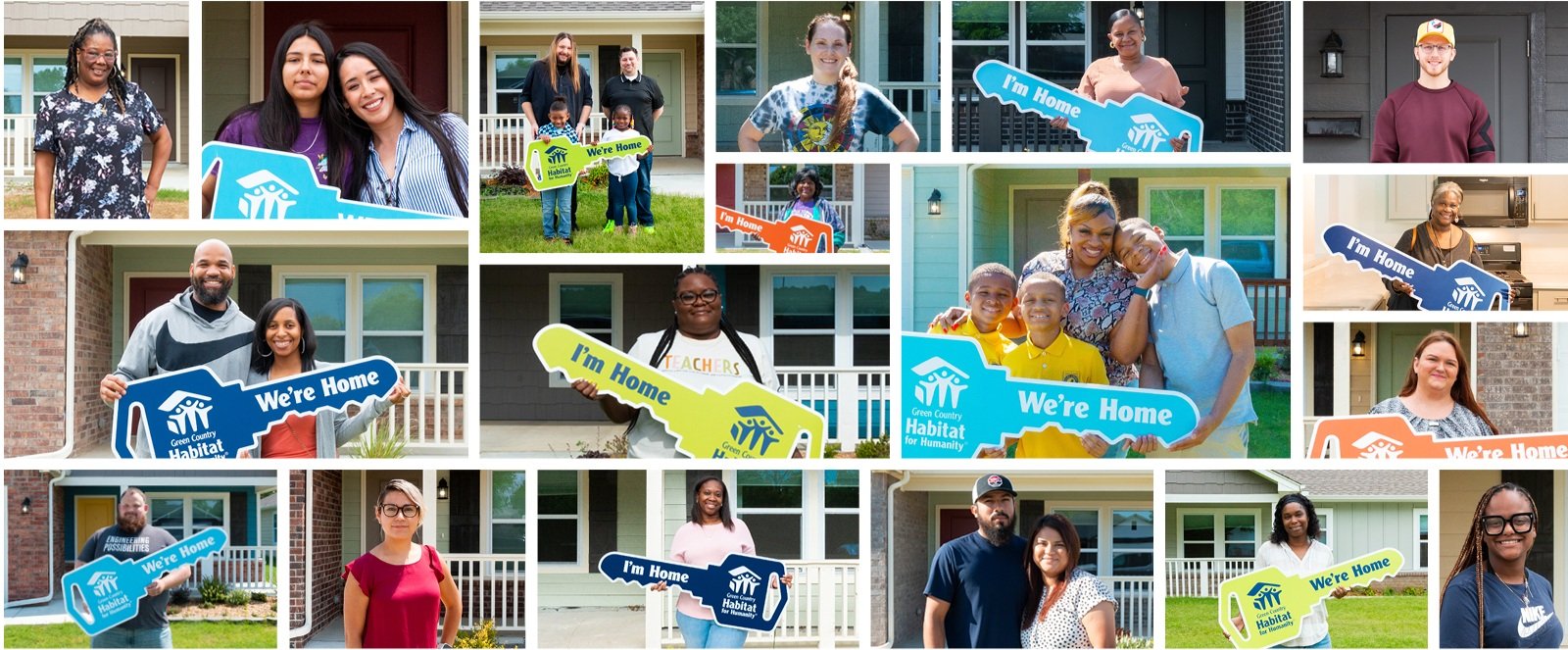
Meet Our Homeowners
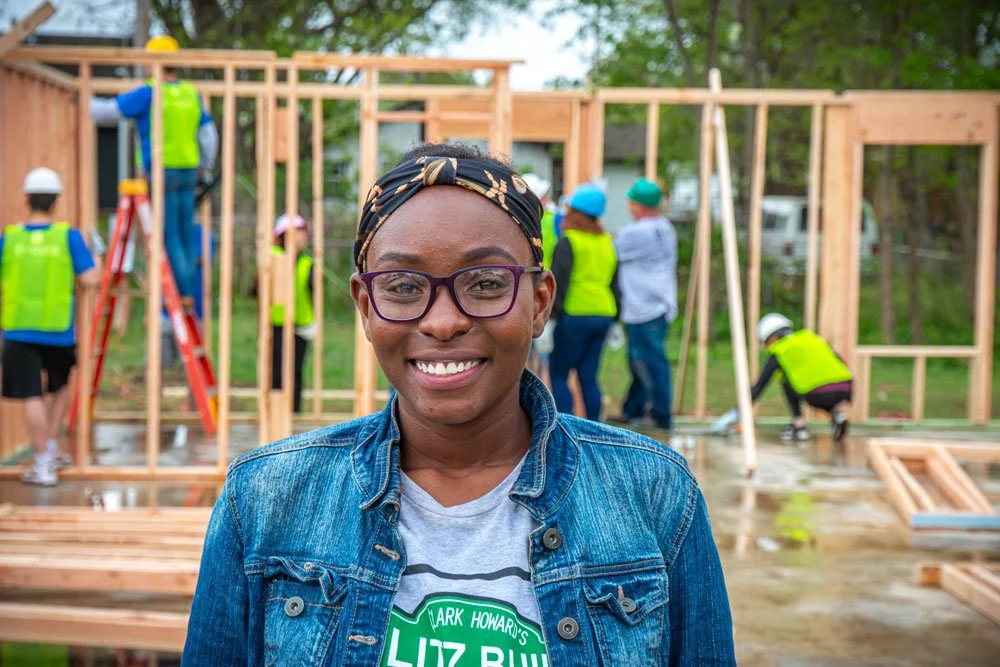
Through Every Hurdle, Home
In the process of becoming a homeowner, what were some hurdles you faced?
Personally I went through some difficult hardships during this process, including a divorce. As you can imagine, ending a marriage is both financially and emotionally taxing, but Habitat supported me and stuck with me. as I worked my way closer to homeownership.
Another hurdle arose as I dealt with my student loan consolidation process; it was long and complicated and I didn't expect the forbearance to be an issue, but I had to be patient. As I remained transparent with Habitat, they understood and navigated me through the steps. I faced setbacks but my financial counselor advocated for me and was very understanding and encouraging. That compassion was something I didn't expect from Habitat, and it was priceless.
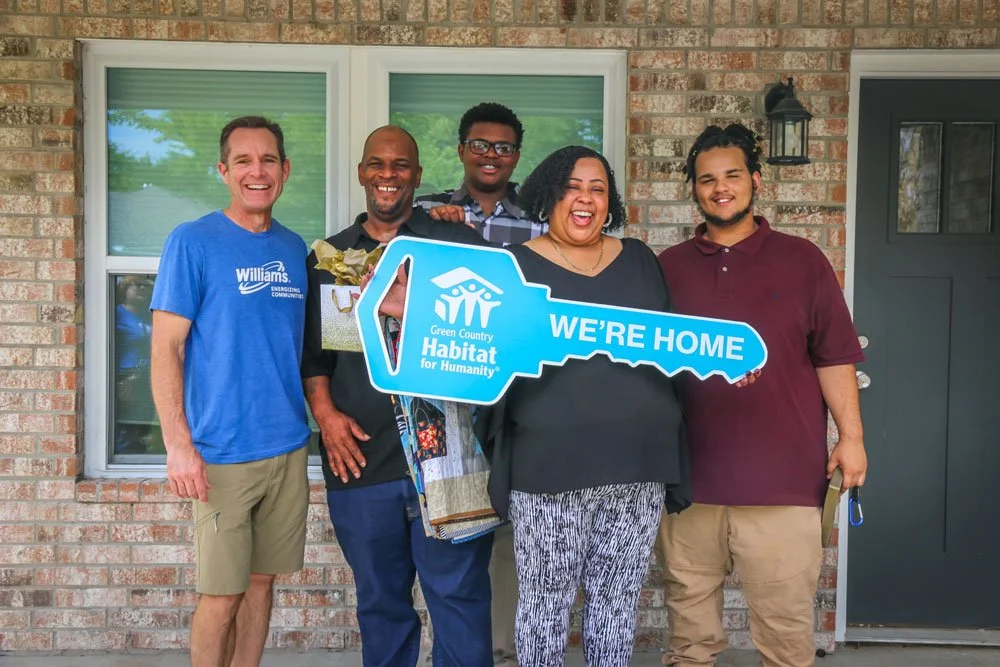
500th Home, A Legacy of Home
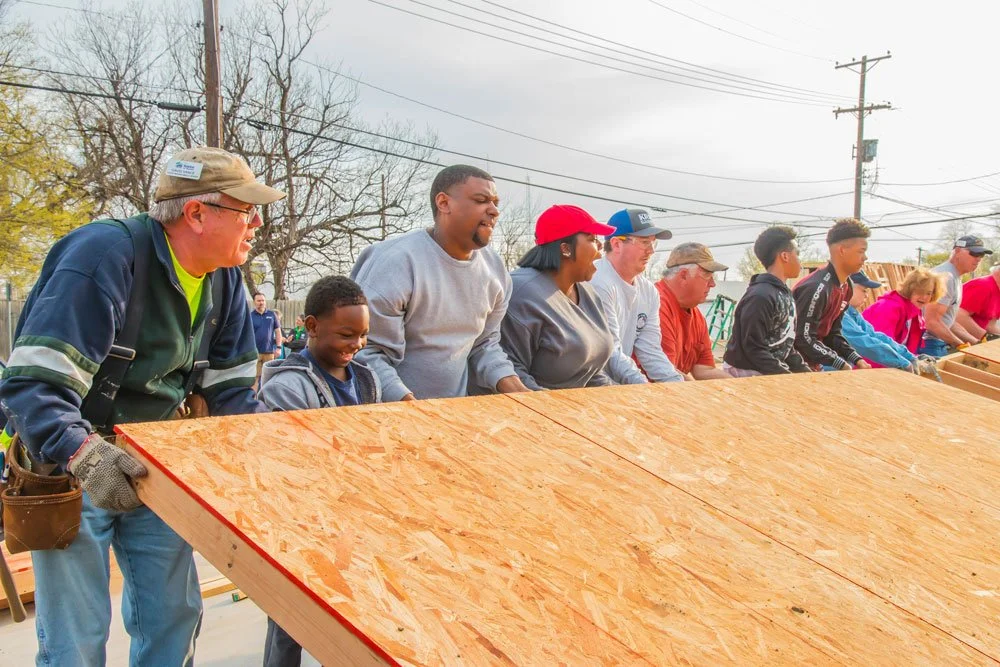
For the Sherina and Allen, owning a new home brings with it a sense of pride and accomplishment. They were required to attend hours of training and complete several courses on financial literacy and homeownership best practices, in addition to contributing more than 30 hours of sweat equity. Volunteerism remains a core tenet of the Habitat for Humanity program, offering families and sponsors the opportunity to get “hands-on.”
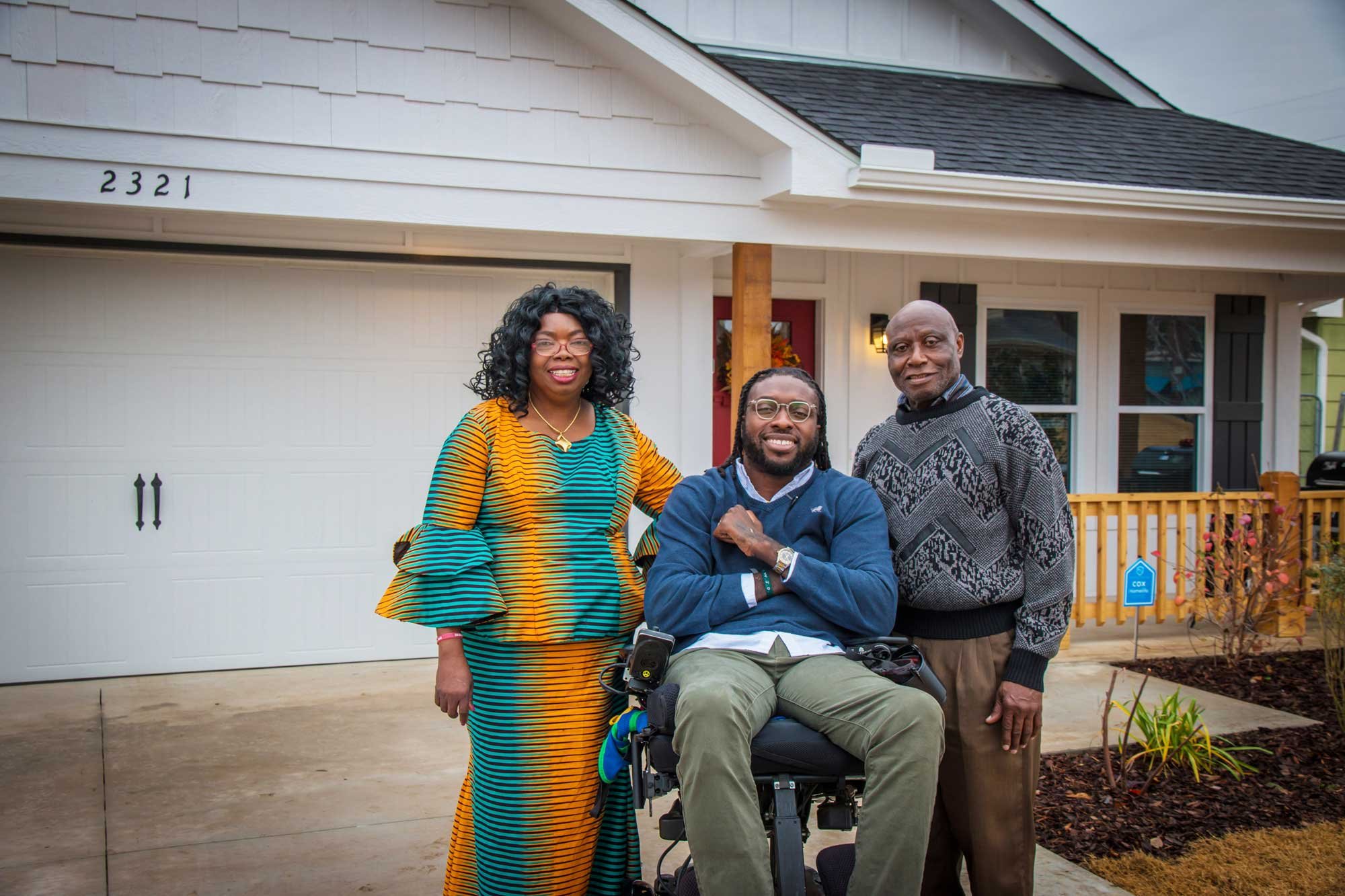
Meet Emeka Nnaka
A native of Macon Georgia, Nnaka moved to the Tulsa area to play semi-professional football. While competing in the league, he sustained a career-ending neck and spinal cord injury that left him paralyzed from his chest down. In the face of the most extreme circumstances, he chose not to give in and not to give up.
After his injury removed him from the gridiron, Nnaka focused on education. He graduated with his bachelor’s degree in Rehabilitation Services from Langston University and is currently studying to receive his master’s in Human Relations from Oklahoma University in Tulsa.
The Power of Saying Yes
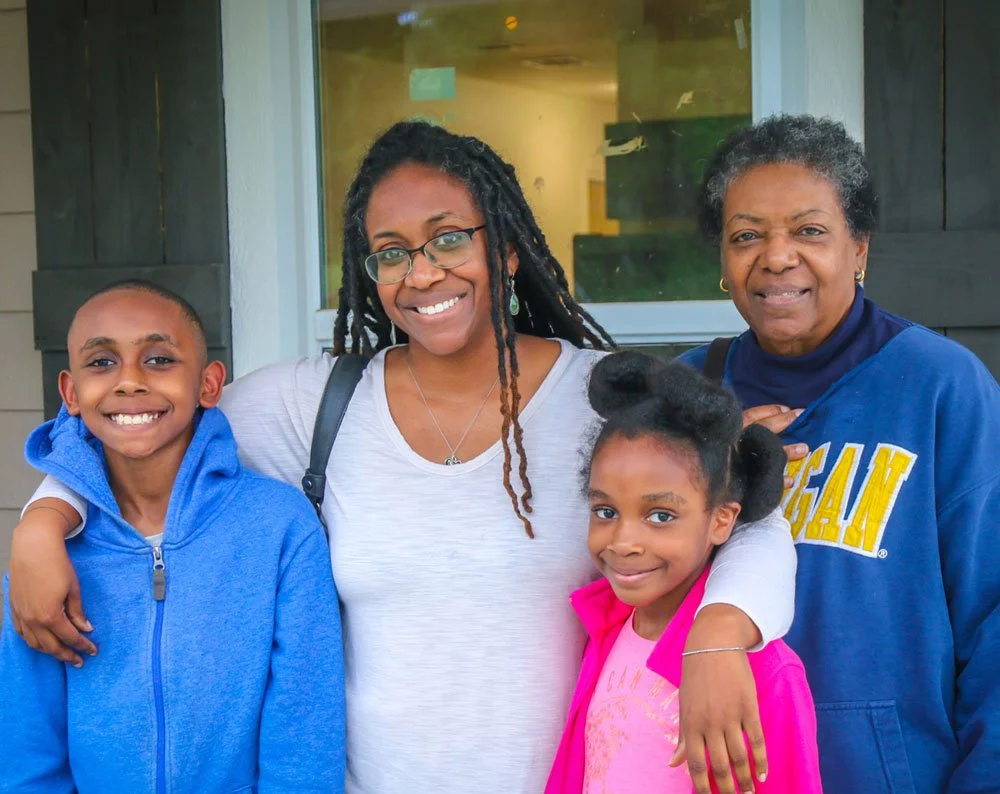
Sharryn selected her home and was excited to own a home in North Tulsa, which was part of a five-home plot. With five families moving into new Habitat homes at once, “we basically have our own community, which I love,” says Dotson. “My kids play with the neighbors’ kids, and I’ve made great connections with other families. We help each other out all the time.” At her previous home, space was tight. Now her kids and mother each have their own rooms, offering more space for privacy and individuality.
Space to Play, Room to Dream
Daniela says she is most excited about owning a home because it will make life easier. Her family of three currently shares a one-bedroom apartment. The limited space means that Daphne is unable invite friends over to play, nor can the family have a pet.
The Ultimate Wedding Gift
When Alex began thinking of putting down roots and starting a family of his own, he thought building a home with Tulsa Habitat might be an excellent way for him to create a stable future. Luckily, he was able to turn to his parents for advice. “My parents told me about the program and explained how much time and effort it would take,” says Alex. “I decided it was something I wanted to do.”
Turning the Key on a New Chapter
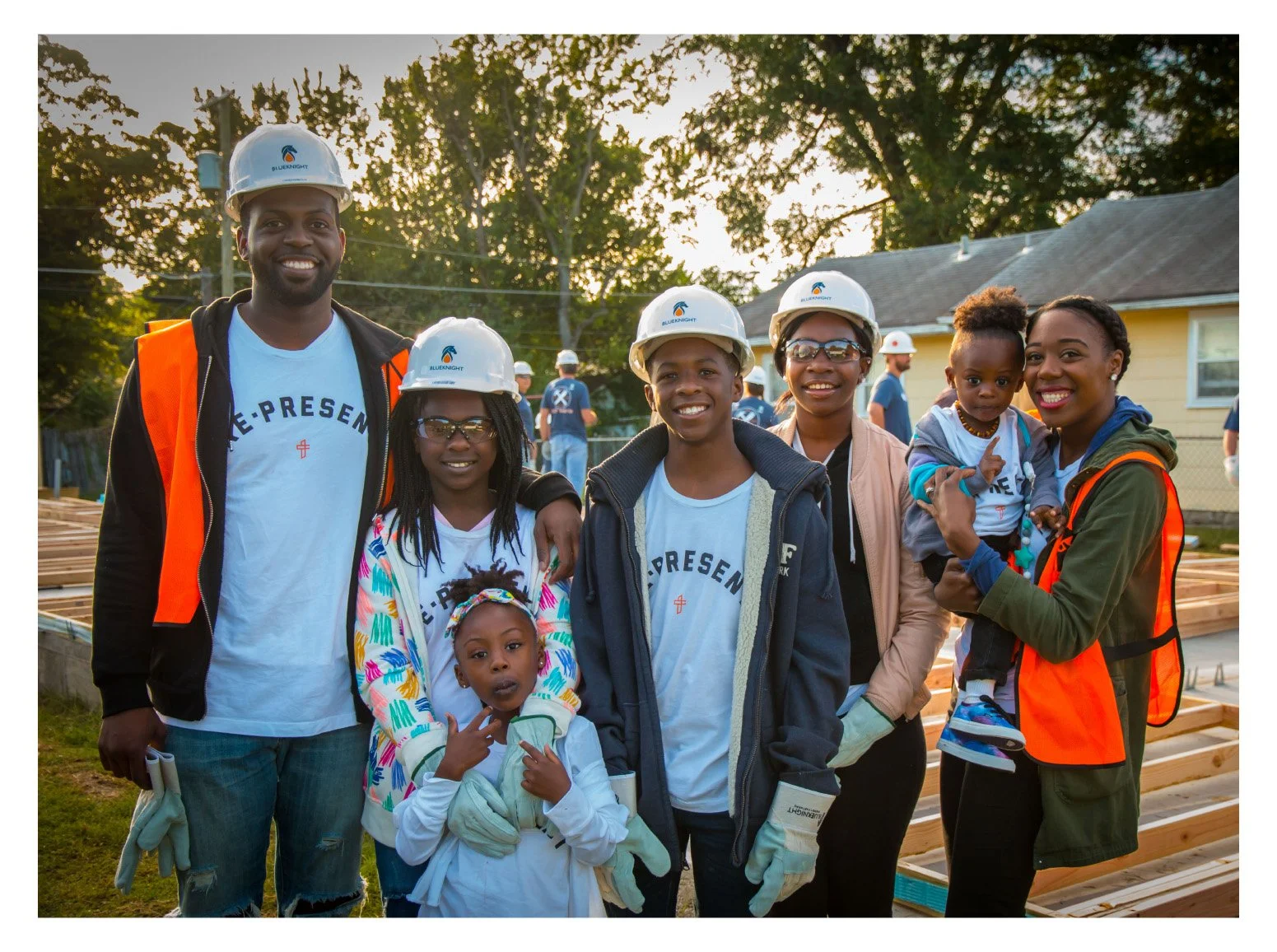
Lynell, who is a musician, and LaQuinta, a home health aide, have been together more than 17 years now, and they have four sons. They’ve built a good life for their family, but really feel like one thing is missing: owning a home of their own.
They first heard about Tulsa Habitat for Humanity when a relative went through the program. Then, they began seeing Tulsa Habitat homes pop up in the Kendall Whittier neighborhood. They began the application process and were thrilled to learn not only could they purchase a home through Tulsa Habitat, the program would also help them improve their financial situation and learn to manage their money better.
Homegrown and Headed Home
For Cherrelle, however, the prospect of homeownership is significant in different way. “It’s important to have something to call your own,” she says. “But for me, the most important thing is being able to pass down this legacy to my kids.”
I’ll Be Home for Christmas
It’s business as usual in the Stanton household on an unseasonably warm February evening. Music plays softly in the family room, the hub of the home. The teenagers wander periodically into the kitchen from their bedrooms in search of snacks while the children play in the backyard.
This scene is completely unremarkable, except for the fact that three months ago, the Stanton family – Johnisha, Johnthan and their five children – was cramped into a two-bedroom condo. No yard, no garage, no personal space. When Johnthan’s sister died unexpectedly last year, leaving behind three children, Johnisha and Johnthan adopted them. The young family of four nearly doubled overnight, and, in the midst of this painful experience, the family was forced to reevaluate their living situation.
Home Work
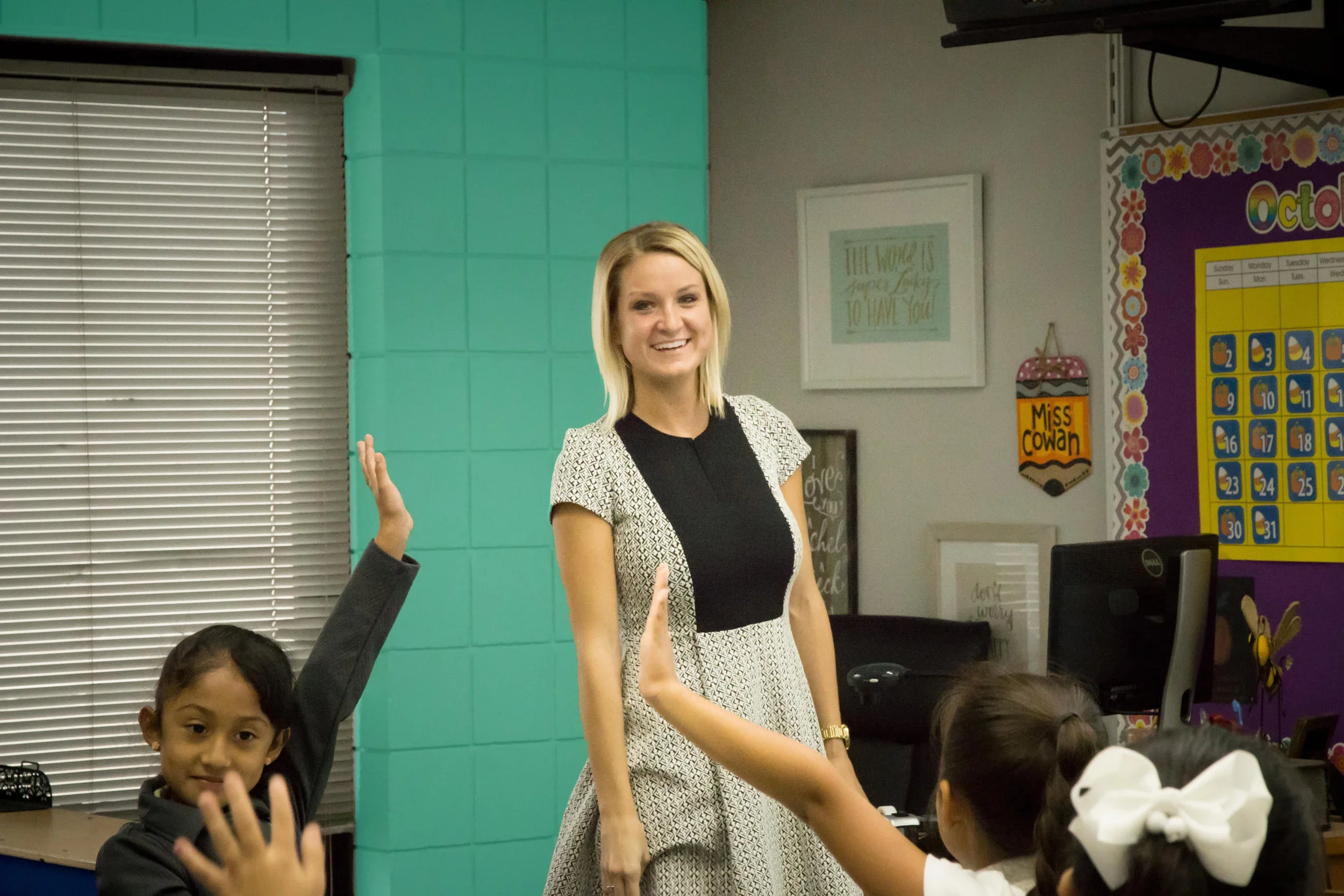
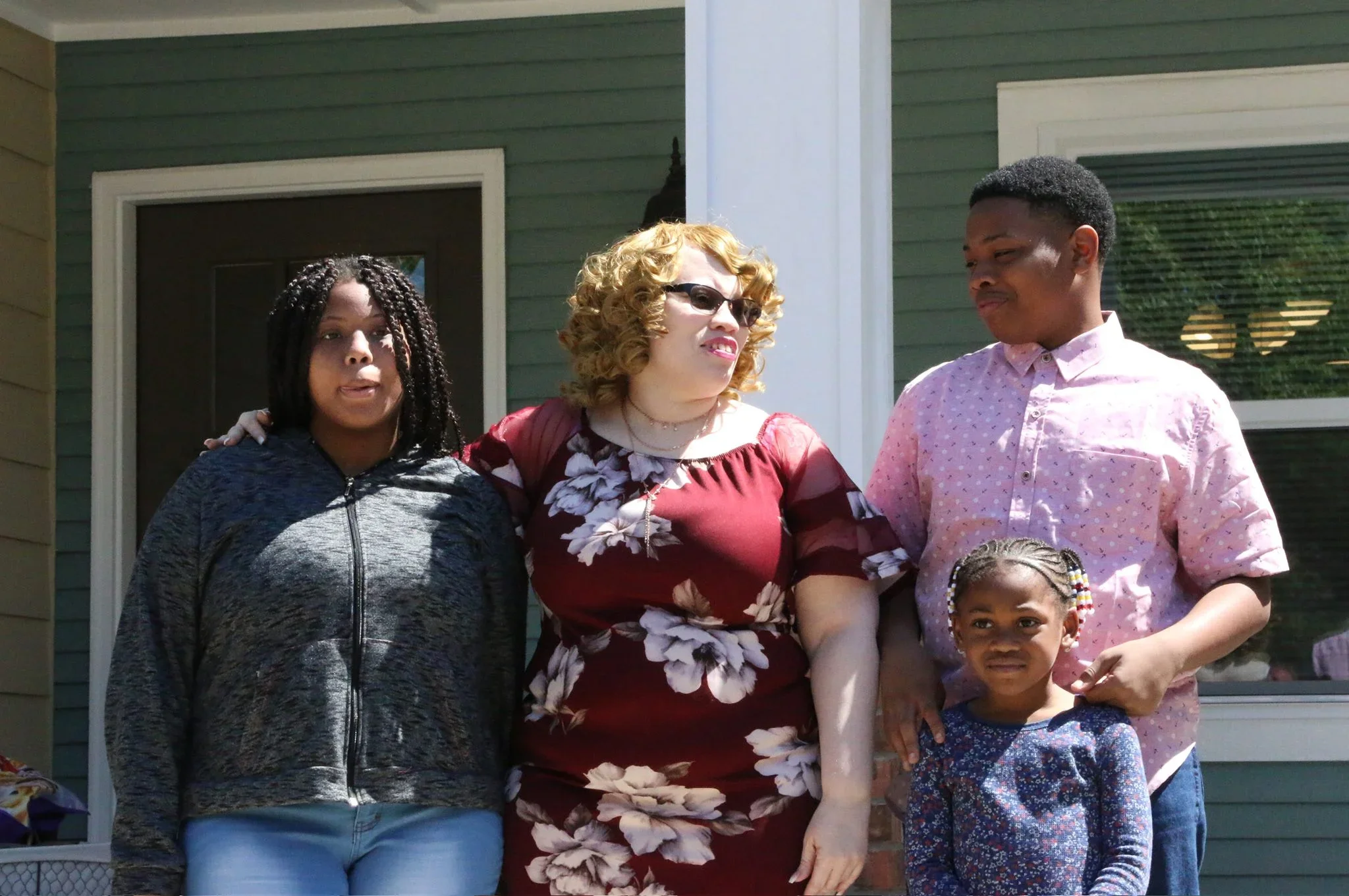
“Owning a home seemed so distant. I’m a teacher, we don’t make a lot of money. It is very sad to say that I’m doing what I love, I have a college degree, I worked really hard, and I can’t afford a home,” says Cowan. Before moving into her Habitat home, Cowan lived in Sand Springs with her parents. She says, “When I found out that Habitat offers [downpayment assistance], and I qualified for the program, I was so excited! I immediately said, ‘Where do I sign up?’"
New to the Neighborhood
After years of renting, she developed a strong desire to own a home a few years ago. “I wanted stability; a say so in my own life,” she says, “and I wanted something to leave to my kids.” This desire became all the more urgent when her landlord put the house that she was renting on the market. Adriaune looked into traditional mortgage programs, paid off all her debt and even found a few homes that would suit her family, but the financing never worked out. Then one day she saw a video about Tulsa Habitat’s recent 24-Hour Build Home, and she remembered a couple of friends who are Habitat clients. She says Habitat was initially a financial means to an end, but the program has turned out to be so much more. “I appreciate the journey,” she says. “I believe you work and you’re rewarded.”
The American Dream
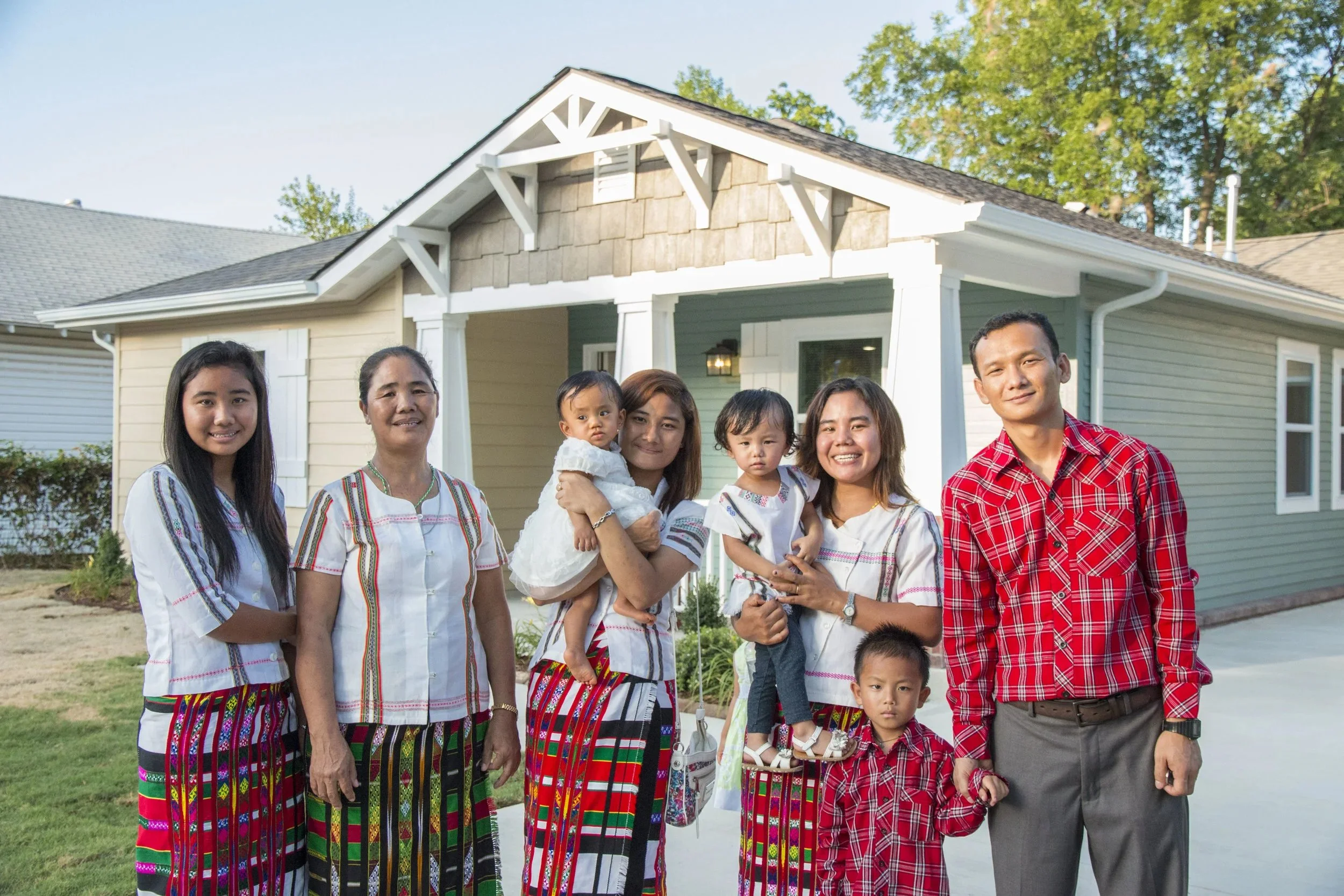
These two young refugees from Myanmar are still adjusting to a new life, a new home, a new language, a new culture, a new city, a new country and a new couch. Furniture is a concept that is relatively new to Judith and Joseph. Options were limited in the countryside where they grew up, and life was tough. They were forced to drop out of school and start farming after 8th grade, their homes were sparse, they sat on the floor, and had no running water or electricity and they cooked on an open, indoor fire with little ventilation.
“The insides of the homes are all black from the smoke,” Judith recalls. “We had to walk miles to get wood. If there was enough wood left over after cooking, we were able to make a fire to stay warm.”
For the Kids
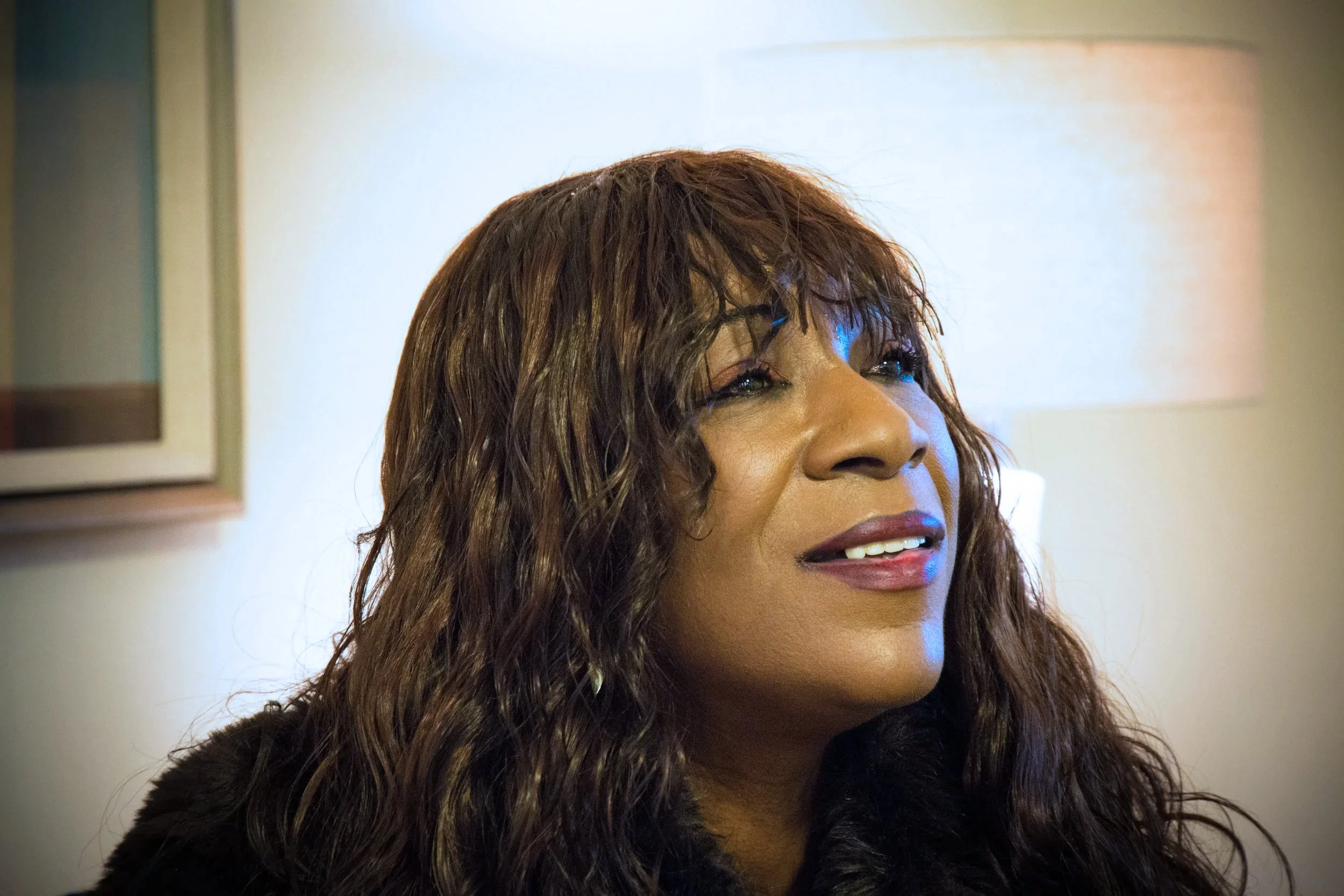
Diane is no stranger to doing things on her own. She lost her father when she was only four, and her mother died suddenly when she was 14 years old, leaving Diane and her siblings to fend for themselves. When they lost the family home, her siblings all went their separate way, and Diane dropped out of school, ending up on the streets. “School just didn’t seem so important anymore.” says Diane. “I was pushed through to the 10th grade, but I could not read. When you don’t know how to read, you have to learn to make it in other ways.”